
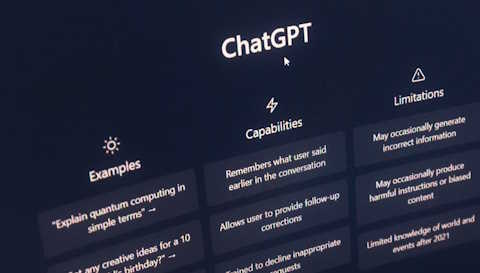
- “An expert witness testifying in a lawsuit about liability for a Houston explosion that killed three people and destroyed roughly 200 homes used ChatGPT to write significant portions of his ‘expert report.’ The man, who was hired by the industrial product conglomerate 3M, exposed his AI prompts publicly. They showed that he asked ChatGPT to help him ‘create an exceptional expert witness report defending the standard of care at 3M,’ and that the report should ‘show how 3M is 0% at fault for the explosion at Watson Grinding.'”
- “The incident shows that artificial intelligence has made its way into courtrooms not just in AI-generated legal briefings, hallucinated cases, and adversarial ‘prompt injections,’ but in expert witness testimonies. Court transcripts, deposition documents, and discovery records shared with 404 Media show extensive AI use in an extremely high profile case, where multiple people died and hundreds of millions of dollars in total liability are at stake in ongoing litigation about the explosion. The case also shows that the specific prompts used to create this type of expert testimony can be discoverable during a case, and that those prompts can be quite embarrassing. (Prompts provided in the case are here). “
- “As part of the case, 3M hired a man named Josh Autenrieth of Knighthawk Engineering to prepare an ‘expert report’ about the explosion. During discovery in the case, Will Moye, one of the plaintiffs’ attorneys, found a five-page document called ‘Citation Overlay,’ which appeared to have been generated by AI. Moye recognized the Citation Overlay document as being from ChatGPT, and demanded all of the prompts Autenrieth used from 3M’s lawyers. The deposition was paused for three hours while they were gathered, and Moye was given 350 pages of ChatGPT conversations that Autenrieth had when creating the report. Those documents included ChatGPT’s public links to Autenrieth’s full conversations. Court transcripts suggest that 3M paid Knighthawk Engineering roughly $90,000 for its analysis, and a filing by 3M shows that Autenrieth’s rate was $475 per hour.”
- “The conversations show much of Autenrieth’s process from start to finish, which included telling ChatGPT that he was ‘being retained as a professional expert witness by 3M in defense of them in their lawsuits and other legal proceedings behind the January 2020 explosion at Watson Grinding.’ He told ChatGPT that he needed ‘to create an expert witness report to defend 3M’s standard of care for their work,’ and that, specifically, it needed ‘to counter the defense witness [sic] outlandish and false claims particularly about working on equipment you are not trained to and without the right permitting.’ He asked ChatGPT to help him find violations of various working standards, then attached hundreds of court records.”
- “Autenrieth then asked ChatGPT to read all of the attached records and to defend 3M, ‘illustrating the lack of [Process and Safety Management] and safety by Watson Grinding, defeating [the defense witness’] comments […] and show how 3M is 0% at fault for the explosion at Watson Grinding and how my background and experience is well suited to render this professional opinion.’ “
- “ChatGPT created a roughly 30-page report that included the line ‘From a technical and standard-of-care standpoint, 3M is 0% responsible for the January 24, 2020 explosion.’ This line did not make it into the final report filed with the court, because when Autenrieth later asked ChatGPT to ‘review this as the opposing council,’ ChatGPT determined that writing ‘‘0% responsible’ is an easy target’ for a lawyer to poke holes in, and is one of several ‘phrases [that] let opposing counsel paint you as an advocate rather than an expert.'”
- “Autenrieth used ChatGPT to help him make various edits to the report it had generated, and repeatedly uploaded different versions of the report, getting revisions from the tool, then uploading new versions of the report (in some of the chats he changed the subject from his expert witness testimony to having ChatGPT generate t-shirt images). He also asked ChatGPT to ‘grade’ his report (it got a 97/100), and ‘what are the 5 main things in my report the prosecution could attack and how do I defend them?’ He then asked ChatGPT if his resume was sufficient to be an expert witness; ‘will prosecution go after me for never having been [an expert witness] before based on wording and how do I defend that?’ “
- “The report that Autenrieth submitted to the court is structured the same as the initial output given by ChatGPT and large swaths of it are identical to what ChatGPT first outputted and the revisions that it recommended in Autenrieth’s subsequent chats.”
- “‘This expert relied on AI not as an assistive device, but exclusively relied on ChatGPT to form his opinions and write his report,’ Moye told 404 Media in a phone interview. ‘He acknowledged [at trial] the prompts he put in were biased toward 3M to help 3M win the case […] it’s really egregious.’ Moye added that many of the prompts took place the night before Autenrieth was deposed as an expert witness. ‘They hired him for the sole purpose of changing the outcome of the case. They hired him and he used ChatGPT to write these reports, so really, ChatGPT was the expert in the case. There’s just no question about that.'”
- “Moye told 404 Media that 3M eventually tried to get Autenrieth disqualified from the trial, but that after he learned Autenrieth extensively used AI to generate his report, he took the somewhat unusual step of calling the other side’s expert witness as his own witness. ‘I said, I’m calling you to trial because I need a jury to hear from you because this is bad, bad stuff. And that’s exactly what I did,’ Moye said.”
- “Beyond this being a highly interesting case on its own merits, it shows that ChatGPT transcripts can be obtained by opposing lawyers in discovery or during depositions. Moye said ‘every lawyer needs to make sure their own experts aren’t generating work product in a way that’s insincere, and then knowing you can subpoena the prompts […] I’ve got lawyers all over the place saying, 1) ‘Holy shit, man. How did you get the prompts?,’ and 2) ‘How many cases do I have where this is happening to us?’'”
“Law Firms’ AI Opportunity Is in the Back Office” —
- “Almost every AI conversation in legal right now is about attorney work. Drafting, review, research, contract analysis. Those tools are real, they’re getting better fast, and firms will need them to stay competitive. But look at what they do: they help attorneys work faster. In a business that sells time, faster doesn’t automatically show up as more revenue. Attorney-facing AI runs headfirst into the billable hour, and its value depends on attorneys changing how they work, which is a hard thing to do inside a law firm.”
- “That isn’t a knock on attorneys. It’s just how the incentives sit. The people whose behavior has to change are the same people who generate the revenue, set the culture, and can opt out at any time without consequence. Unless a firm has a managing partner or a board with unusual appetite for pushing technology, adoption is voluntary. And voluntary adoption is how you end up with a platform the firm paid for two years ago that four people use.”
Meanwhile, the part of the firm where process optimization has the biggest impact is sitting right there. The Back Office Is Where the Firm Actually Runs. Intake. Conflicts. Matter setup. Reimbursements. Vendor payments. The work that has to happen before anyone can bill an hour, and the work that has to happen after.” - “Two things are true about that work at most firms. The first is that it runs on genuinely old technology. The accounting and practice management platforms in this industry were architected a long time ago, and it shows in the number of clicks it takes to do anything.”
- “The second is more expensive: firms have built entire administrative processes around compensating for those interfaces. There are people whose job is substantially to be the connective tissue between systems that were never designed to talk to each other, and to chase attorneys who don’t want to fill out the form. Fix that and you don’t save hours in some theoretical way that never shows up in a financial statement. You reduce cost, and it goes straight to the bottom line.”
- Start with Intake, Because Intake Touches Everything. When a firm asks where to start, we start with intake. Not because intake is the biggest pain, though it usually is, but because of what building it forces you to connect.”
- “To run intake properly you need to reach the document management system, the accounting and billing platform, the conflicts data, and
- increasingly the CRM. Get intake right and you’ve built the foundation the rest of the back office runs on.”
“Here’s what it looks like in practice. Today an attorney gets asked to fill out a long form. It may be dynamic, it may be well designed—it doesn’t matter. They don’t want to fill out a form. So instead, they send an email the way they would to a colleague. The system reads the email, derives the context, populates the form, and hands it to the admin team to review before anything moves. The person who is good at this work still puts eyes on it, fills in what’s missing, and kicks off the conflicts check. The human stays in the loop. The friction moves off the person least willing to absorb it.” - “Two things make back-office AI difficult, and neither of them is the AI. The models are the easy part now and getting easier. What’s hard is everything they have to touch. The first is integration. The same platforms that make the back office painful to work in are painful to connect to. Some have a real API. Some have an API that covers a third of what you need. Some have nothing worth using, and you need to build a database connection, a nightly file, or a vendor conversation that takes a year to resolve. This is where the budget on these projects actually goes. Not the AI, which is comparatively cheap and getting cheaper. Any firm scoping this work should establish, before anything else, what its core systems will permit, and expect a few engineering challenges. ‘We have an API’ and ‘you can do what you need through the API’ are different sentences, and vendors are not always quick to distinguish them.”
- “The second is governance. You are building something that reads client email, touches conflicts data, and writes into the accounting system. That sits squarely inside the firm’s confidentiality obligations, and it sits on top of outside counsel guidelines that increasingly say specific things about AI. Some clients now require notice. Some require consent. Some prohibit certain uses outright.”
- “The item, less dramatic and in my experience the more common cause of failure: somebody has to own it. This is not a project with an end date. Processes change, systems get upgraded, a vendor renames a field and something quietly stops working. The firm needs a named person responsible for that, internal or fractional, but named. Firms that treat go-live as the finish line end up with a layer that worked well for eight months and nobody who noticed when it stopped.”
- “Go back to the deployment problem. The reason so much legal technology stalls is that it requires behavior change from people who don’t have to change. Back-office AI doesn’t. The attorney sends an email, which is what they were going to do anyway. The administrative team gets a better version of the process they already own. Nothing about the firm’s existing systems has to be ripped out, because the whole point is to sit on top of them and connect them.”
“None of that changes because the work is hard. It’s a trade, and it’s one I’d make every time. The difficulty in back-office AI is technical, and technical problems can be scoped, priced, and handed to people you hire. The difficulty in attorney-facing AI is behavioral, and there is nobody you can hire to make a partner change how they work.” - “The AI conversation in legal is going to stay focused on the attorneys, and it should. But if you’re looking for the place where AI can go into a law firm this year and produce a measurable result without a change management fight, it’s the part of the firm nobody is talking about.”
“Ex-Client Can’t Revive Brach Eichler Malpractice Suit” —
- “A New Jersey appellate panel on Thursday affirmed a lower court ruling granting summary judgment to Brach Eichler LLC in a suit accusing the firm of legal malpractice from its work in a long-running real estate dispute.”
- “In its ruling, the New Jersey Superior Court’s Appellate Division agreed that Brian Delaney was barred from pursuing his conflict of interest claims against Brach Eichler because he failed to object to the firm’s participation during the original matter that led to the malpractice suit.”
- “The underlying suit, which originally stemmed from a matter in which Delaney sued his ex-partners for allegedly misappropriating his capital contributions to their former business venture, said that by failing to properly draft documents related to his ownership of Cash Cow Sparta Village, Brach Eichler helped set the dispute in motion when Prassas and the Dykstras decided to remove Delaney as a CC Holdings member.”
- “Three separate lawsuits ensued following Delaney’s ouster from CC Holdings, during which he never objected to Brach Eichler’s representation of Prassas despite its prior representation of Cash Cow Sparta Village, which he believed himself to be a part of, the opinion said.”
- “Additionally, because Delaney had already agreed to a settlement in a prior matter that included the mutual release of all claims, the panel said, he was no longer able to file another suit related to those issues.”
- “‘The judge specifically noted Delaney was collaterally estopped from relitigating issues previously decided, including the alleged conflict and his lack of ownership interest in [Cash Cow Sparta Village], both of which were central to the dismissal of his earlier claims,’ the panel said. ‘The court also found the statements made by Brach Eichler in its representation of Prassas were protected by the litigation privilege, regardless of their truth or falsity.'”
- “The decision affirming summary judgment comes after a 2020 opinion by the same court in which a panel overturned a trial court decision that barred Brach Eichler from serving as counsel in the underlying litigation, finding that Delaney gave up his right to seek the firm’s disqualification by not raising an objection in prior matters. The panel said the prior settlement also invalidates Delaney’s negligence claim as the decision to accept it meant he was unable to prove he suffered damages.”